
Workflow Status Management
Master the complete lifecycle of your automation systems. From starting and monitoring to pausing and archiving, effective status management ensures your workflows run smoothly and deliver consistent business value.Quick Status Overview
Workflows have four statuses. The status chip in the workflows list uses a display label that may differ from the status name:Workflow Status Dashboard
Accessing Status Management
Navigate to Automations → Workflows to access the comprehensive status management dashboard: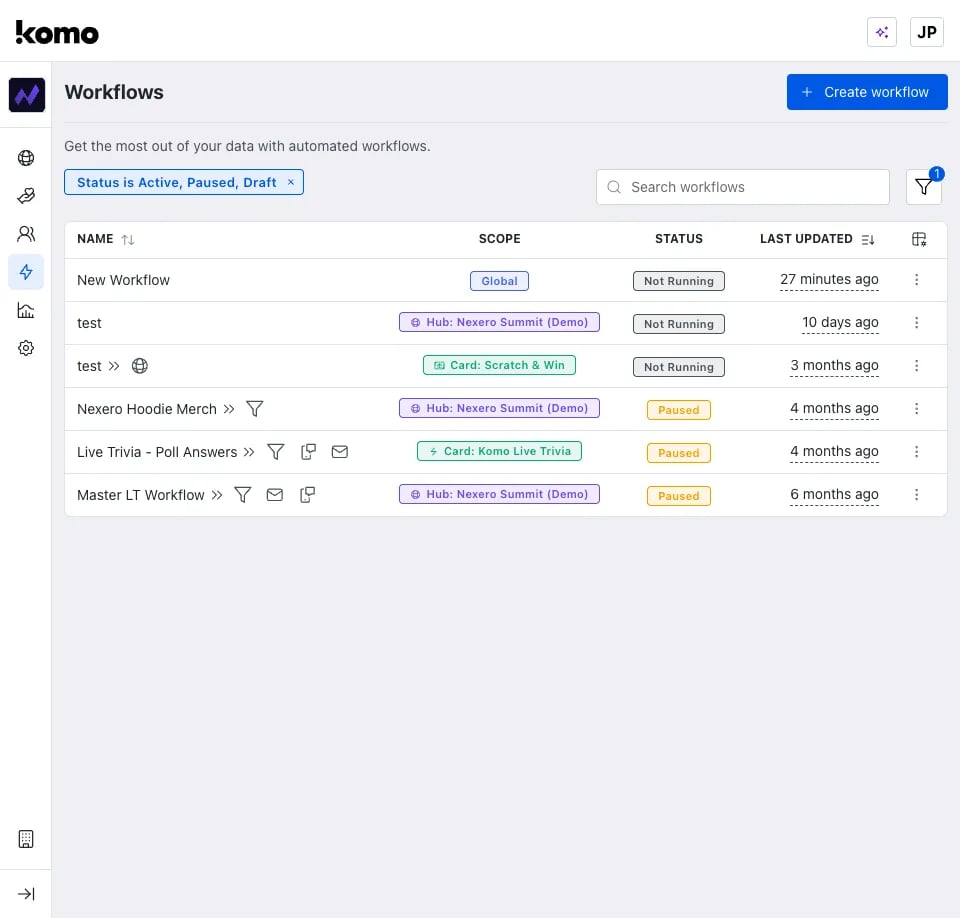
- Status Filter Bar - Filter workflows by Draft, Running, Paused, or Archived
- Status Column - Status chips for each workflow (Draft, Not Running, Running, Paused, Archived)
- Quick Actions Menu - Three-dot menu for status changes and management
- Search & Sort - Find and organize workflows by status and performance
Status Filter Controls
Filter options:- Draft - Draft-status workflows (chip shows Draft or Not Running)
- Running - Active workflows currently processing triggers
- Paused - Temporarily disabled workflows
- Archived - Archived workflows
- Combine multiple statuses for a targeted view
Understanding Workflow States
Active (shown as Running)
What it means: Workflow is live and processing triggers in real time. Visual Indicators:- Green Running status chip
- New executions appear in workflow runs
- Production workflows handling live user interactions
- Critical automation sequences (welcome series, lead qualification)
- Workflows that have been tested and validated
- Monitor execution volume and success rates
- Pause if issues are detected (you must pause before you can Archive)
Paused Status
What it means: Workflow execution is temporarily suspended but configuration is preserved. Visual Indicators:- Yellow Paused status chip
- No new trigger processing
- Temporary maintenance or updates needed
- External system integration issues
- Testing alternative workflow configurations
- Seasonal campaigns during off-periods
- Use Run (list) or Start (Overview) to put the workflow back into Running
- Archive is available from the paused state
- Update the workflow if needed before starting again
Draft Status
What it means: Workflow is not processing triggers. Visual Indicators:- Gray Draft chip if the workflow has never been published
- Gray Not Running chip if the workflow is in Draft status but already has a published version
- Initial workflow creation and setup
- Major reconfiguration of existing workflows
- Testing complex automation logic
- Collaborative workflow development
- Complete trigger and action configuration
- Run from the workflow list (or Start on the Overview) when ready for production
- Delete is available for Draft workflows
Archived Status
What it means: Workflow is archived and removed from the active working set. Visual Indicators:- Orange Archived status chip
- Unarchive restores the workflow to Paused (not Running). There is no return-to-Draft action.
- Delete only shows for Draft workflows, so an archived workflow cannot be deleted
Status Change Operations
Starting Workflows
From the Workflow List:- Locate the Draft or Paused workflow
- Click the three-dot actions menu
- Select “Run”
- Confirm in the dialog (Start workflow? / “Yes, start it”)
- If the workflow is valid — you see a confirmation prompt: “Are you sure you want to start [workflow name]? The draft will be published and the workflow will begin running.” Click “Yes, start it” to publish the draft and start the workflow in one step.
- If there are errors or warnings — the modal displays the specific issues found. You must resolve any errors before the workflow can be started.
- All required triggers configured
- Essential actions properly set up
- External integrations tested
- Notification preferences configured
- Success metrics defined
- Start with limited scope (single hub/campaign)
- Monitor closely for first 24 hours
- Validate trigger firing and action execution
- Check for any unexpected volume spikes
Pausing Workflows
When to Pause:- Scheduled maintenance windows
- External system outages
- Unexpectedly high failure rates (>10%)
- Business rule changes requiring updates
- A/B testing alternative approaches
- Navigate to the active workflow
- Click three-dot actions menu
- Select “Pause”
- Confirm the pause
- Review workflow performance data
- Make necessary configuration updates
- Test changes before starting again
- Communicate timeline to stakeholders
Starting a Paused Workflow
Before you start again:- Original pause issue resolved
- No configuration conflicts introduced
- External systems fully operational
- Team aligned on timing
- Locate the paused workflow
- Click actions menu → “Run” (or Overview → “Start”)
- Confirm “Yes, start it”
- Monitor the first batch of runs
Cloning Workflows
Create a copy of any workflow to reuse its configuration as a starting point for a new automation. Cloning Process:- Locate the workflow you want to clone
- Click the three-dot actions menu
- Select “Clone”
- In the confirmation modal, enter a name for the cloned workflow (max 50 characters). A default name is suggested based on the original workflow name.
- Click “Clone” to confirm
- Reusing a proven workflow pattern for a different campaign
- Creating variations of existing automations for A/B testing
- Setting up similar workflows across different scopes
Archiving Workflows
There is no Stop, Deactivate, or Activate action. To take a workflow out of day-to-day use:- Pause the workflow first (Archive only appears for Paused workflows)
- Click the workflow actions menu
- Select “Archive”
- Confirm the archive
Audit trail
All workflow status changes and configuration updates are recorded in your company’s audit log. This gives you a complete history of who made changes, when they happened, and what was modified. Tracked events include:
To view workflow audit events, navigate to Settings → Audit Log and filter by workflow event types. Version update events include a detailed diff view showing exactly what changed between the previous and new configuration.
Monitoring Workflow Health
Execution Status Tracking
Access detailed execution monitoring at Automations → Workflow Runs: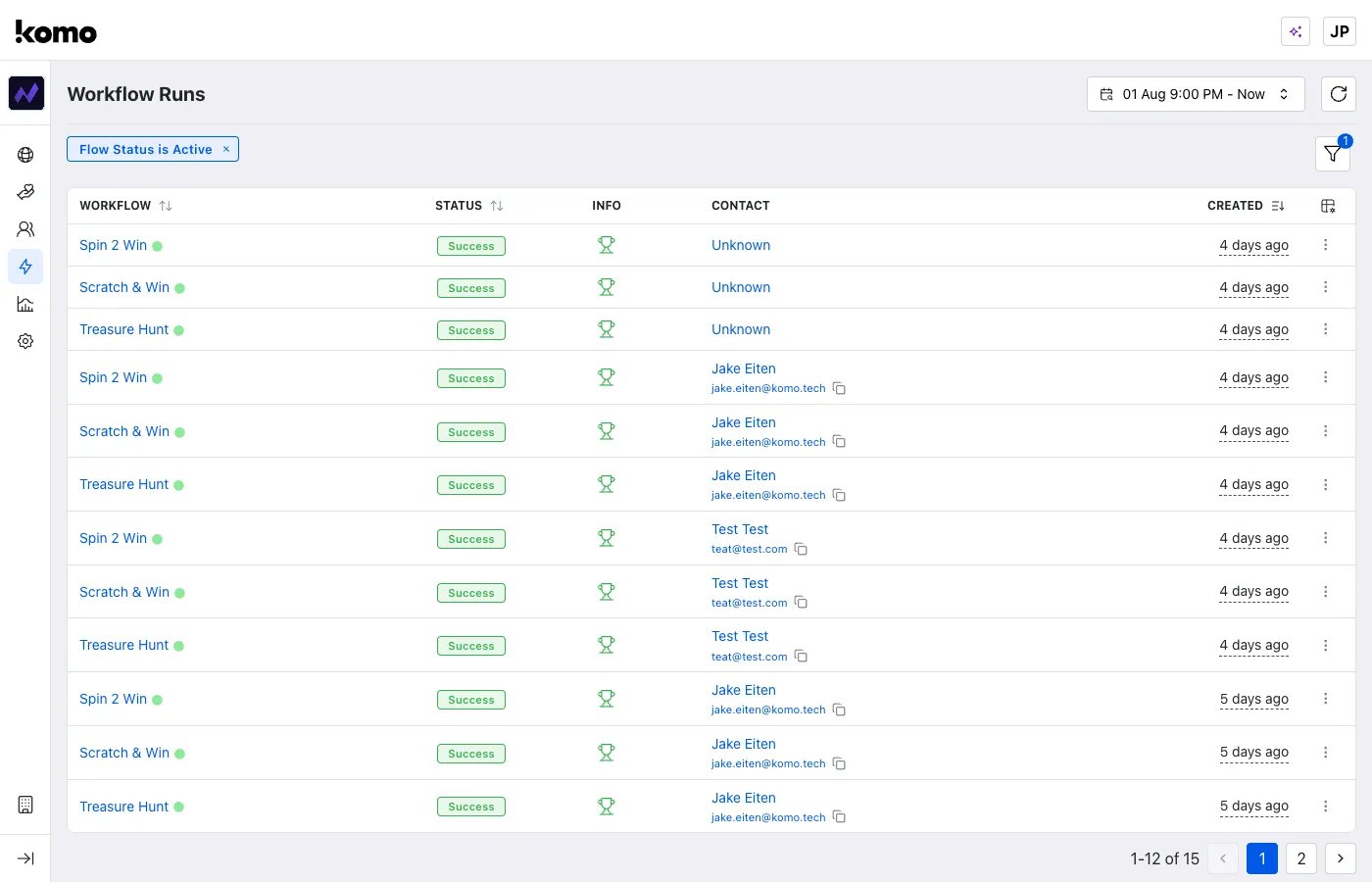
What’s Next?
Explore Related Documentation:- Workflow Creation Guide → - Build effective workflows from scratch
- Performance Monitoring → - Deep dive into execution analysis
- Integration Patterns → - Managing status across external systems
- Contact support at [email protected] for status management consultation